
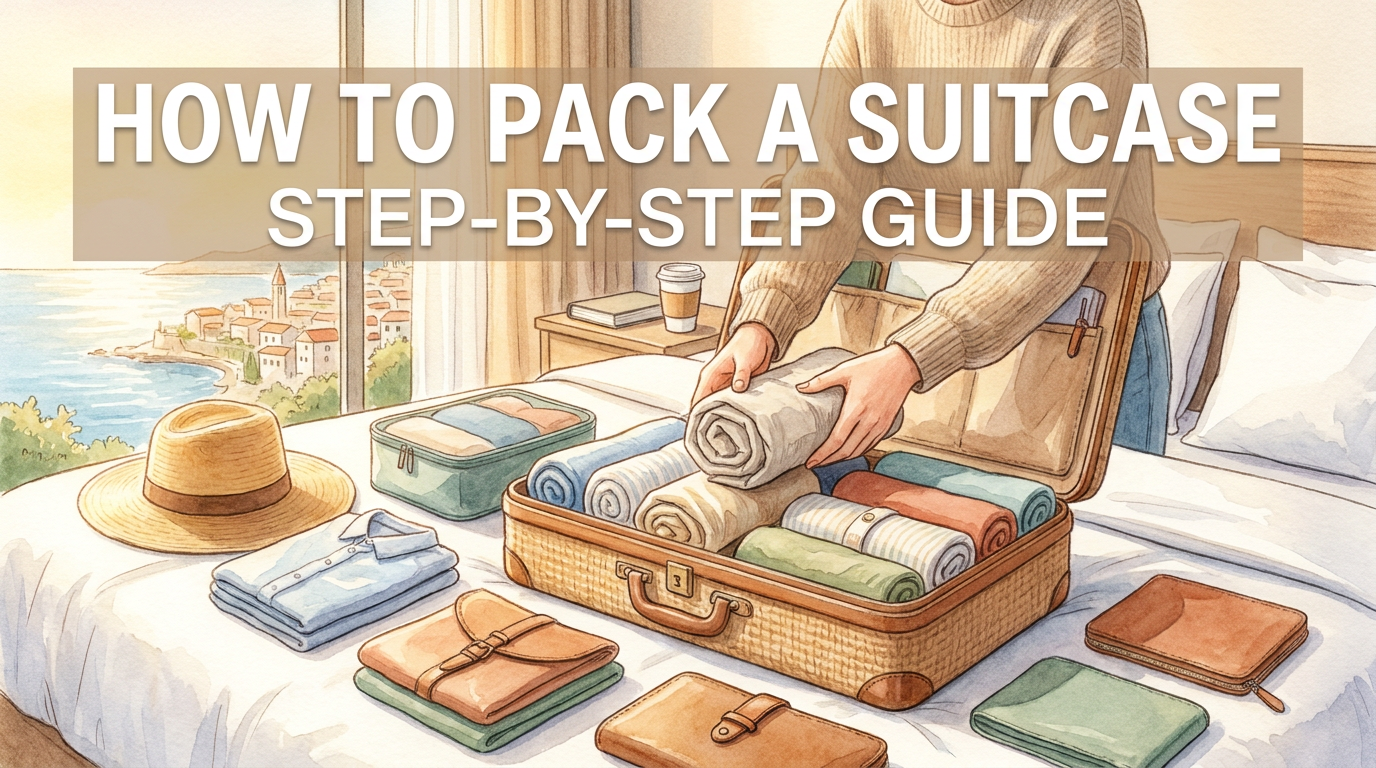
Knowing how to pack a suitcase properly comes down to one thing: a repeatable order you can follow every time. Lay everything out, build from the heaviest items at the base, roll the soft clothes, fold the structured ones, then fill the gaps. Get that sequence right and you fit more in, crush fewer clothes, and never sit on your case to zip it shut again.
At Simplify Living, we've spent years refining travel gear with feedback from more than 300,000 travellers, and the same packing questions come up again and again. This is the method we keep coming back to — a calm, step-by-step system that works for a weekend away or a three-week trip, in a hard-shell or a soft case.
The quick version: Lay everything out and edit it down, put heavy items (shoes, toiletries) at the base near the wheels, roll soft clothes to fill the middle, fold structured pieces flat on top, then stuff socks into shoes and fill every gap. Keep documents and valuables in your carry-on, never checked.
Before You Start: Lay Everything Out
The single biggest packing upgrade isn't a technique — it's seeing everything before it goes in. Lay all your clothes, shoes and accessories on the bed first. It sounds obvious, but it's the step almost everyone skips, and it's where overpacking quietly begins.
With everything visible, you can spot the third pair of jeans you don't need, the duplicate jumper, and the “just in case” outfit that never gets worn. A good rule of thumb is the Rule of Three: roughly three tops and three bottoms that mix and match, building outfits rather than packing them whole. Choose a neutral colour base so most pieces work together.
- Check the forecast for your destination — pack for the weather you'll actually get, not the trip you're imagining.
- Stick to two pairs of shoes where you can; they're the biggest space-eaters in any case.
- Pull out your travel documents, medications and chargers now and set them aside — they get packed separately.
Step 1: Choose and Prep the Right Suitcase
How you pack depends a little on what you're packing into. A hard-shell case packs in two even halves and protects fragile items; a soft case usually has more give and external pockets for things you want fast. Match the size to the trip — a cabin bag for a few days, a mid-size check-in for a week or more — because a half-empty large case just tempts you to fill it.
Whatever you're using, start with it empty, clean and flat. If your case has compression straps inside, loosen them fully so you're not fighting them as you build your layers.
Step 2: Heavy Items First — Mind the Weight
Build your base layer with the heaviest, sturdiest things: shoes (in dust bags or an old shopping bag), wash bag, and anything bulky. Where they go depends on how the case travels.
- Packing upright (wheeled case standing up): put heavy items along the bottom edge near the wheels. That keeps the centre of gravity low so the case rolls steadily instead of toppling.
- Packing flat (case lying open): place heavy items near the hinges rather than the lid, so weight sits evenly and doesn't crush the clothes on top.
This one habit — heavy low and toward the wheels or hinges — is what stops a suitcase from feeling top-heavy and awkward the moment you tip it upright.

Once the heavy items are in, it's worth a quick weigh-in with a digital luggage scale before you go further. It's far easier to remove a pair of shoes now than to repack at the check-in desk while the queue builds behind you.
Step 3: Roll the Soft Clothes
Rolling is your space-saver. Tightly rolled garments squeeze out air pockets and let you slot clothes together like puzzle pieces, which is why rolling typically saves you somewhere in the range of 10–30% more space than loose folding, depending on the fabric. It also tends to leave fewer hard creases in soft materials.
Roll the soft, casual, wrinkle-tolerant stuff and lay the rolls snugly across your base layer:
- T-shirts, tank tops and cotton tops
- Jeans, casual trousers and shorts
- Activewear, leggings and pyjamas
- Underwear and socks (or tuck these into your shoes — see Step 6)
To roll well, lay the item flat, smooth out wrinkles, fold in any sleeves, then roll tightly from one end. The neater the roll, the more you'll fit.
Step 4: Fold the Structured Pieces on Top
Rolling isn't right for everything. Structured and delicate garments hold their shape far better folded and laid flat — and crucially, they go on top of your rolled layer, where they won't be squashed.
- Dress shirts and blouses
- Blazers, suit jackets and tailored trousers
- Linen, silk and anything that creases if you look at it wrong
For pieces you really need crisp, lay a sheet of tissue paper or a thin dry-cleaning bag between folds — it reduces friction and softens the crease line. If you're carrying a suit to a meeting, folding always beats rolling.
Not sure which way to go for a given item? Here's the quick reference we use:
| Method | Best for | Watch out for |
|---|---|---|
| Rolling | T-shirts, jeans, casual wear, activewear, pyjamas — and squeezing into hand luggage | Bulky knits and structured shirts; delicate linen can still crease |
| Folding | Dress shirts, blazers, tailored trousers, anything you want crisp | Uses more space and can leave gaps; deep creases if packed too tight |
| Both (hybrid) | Most trips — roll the soft stuff, fold the structured stuff | Needs a little planning so layers stay stable |
If you want to go deeper on this debate, we break it down properly in our guide to rolling vs folding and the best packing method.
Step 5: Use Packing Cubes to Lock It All Together

Loose clothes shift in transit, and shifting clothes wrinkle and waste space. Packing cubes solve both: they keep each category contained so your case stays organised from the first day to the last. Compression packing cubes go a step further — a second zip squeezes the air out, freeing up noticeably more room for the same clothes.
Group items by type (tops in one, bottoms in another), compress, and stack them into the case. It also makes living out of your suitcase far easier — and if you want the full rundown, see our guide on whether packing cubes are worth it.
Step 6: Fill Every Gap
A well-packed case has no dead space. Once your main layers are in, go hunting for gaps:
- Stuff socks, underwear and chargers inside your shoes — it uses hidden space and helps shoes keep their shape.
- Slide belts around the inner perimeter of the case.
- Tuck small soft items into the corners and along the edges.
- Wear your bulkiest items — coat, chunky boots — on the plane rather than packing them, freeing up serious room.
Step 7: Pack Toiletries and Tech Safely

Toiletries are the classic disaster — a leaking bottle can ruin a packed case. Decant liquids into leak-proof travel toiletries bottles, keep them under 100ml each for carry-on, and store them upright in a sealed bag. For checked bags, a twist of cling film under each lid is cheap insurance.

Cables, chargers and adapters tangle and vanish into the bottom of a bag. Keep them together in an electronic accessory organiser so you're not unpacking the whole case to find a charging cable at midnight.
Crucial rule: your passport, travel documents, medications, valuables and a spare change of clothes go in your carry-on — never your checked suitcase. Checked bags get delayed; your essentials shouldn't travel where you can't reach them.
Step 8: Final Checks Before You Zip Up
Two minutes of checks now saves real stress later. Before you close the case:
- Weigh it again so you're safely under your airline's limit.
- Confirm documents, medication, chargers and valuables are in your carry-on, not the case.
- Do a quick scan against your list — passport, cards, adapter, anything you can't easily replace overseas.
- Close compression straps or zip the cubes down so nothing shifts in transit.
Then zip up with room to spare — if you're sitting on the case to close it, take something out rather than risk a burst zip at the worst possible moment.
Common Mistakes to Avoid
- Packing without a plan: throwing things in randomly wastes space and leaves you digging. Build in layers.
- Heavy items on top: makes the case top-heavy and crushes your clothes. Keep weight low and toward the wheels.
- Rolling delicate fabrics: linen and dress shirts crease more when rolled — fold those flat on top.
- Essentials in checked luggage: medications, documents and a change of clothes belong in your carry-on, always.
For more on the traps that catch travellers out, we've rounded up the 5 most common packing mistakes and how to dodge them.
Frequently Asked Questions
What is the correct way to pack a suitcase?
Pack in layers from the bottom up: lay everything out and edit it down first, put heavy items like shoes at the base near the wheels, roll soft clothes to fill the middle, fold structured pieces flat on top, then fill every gap with small items. Keep documents and valuables in your carry-on.
Is it better to roll or fold clothes in a suitcase?
Both — it depends on the garment. Roll soft, casual items like t-shirts, jeans and activewear to save space and reduce creases. Fold structured or delicate pieces like dress shirts, blazers and linen, and lay them flat on top so they keep their shape.
Where should heavy items go in a suitcase?
Toward the bottom, near the wheels, when the case is upright. This keeps the centre of gravity low so the suitcase rolls steadily and doesn't tip. If you pack the case lying flat, place heavy items near the hinges rather than the lid so weight stays balanced.
How do I stop my clothes wrinkling in a suitcase?
Roll soft fabrics, fold structured ones flat, layer tissue paper between formal pieces, and stop clothes shifting by using packing cubes. Unpack and hang key items as soon as you arrive. Our guide on keeping clothes wrinkle-free covers the details.
How can I fit more in my suitcase?
Roll instead of loose-folding, wear your bulkiest items on the plane, stuff socks and small items inside shoes, and use compression packing cubes to squeeze air out of soft clothes. Editing your wardrobe down with the Rule of Three usually frees up the most space of all.
Pack Smarter on Your Next Trip
A good packing system turns a stressful scramble into a five-minute job. Once the order becomes second nature, you'll fit more in, arrive with clothes ready to wear, and travel with a lot less faff. If you want to make it even easier, our compression packing cubes are the single best upgrade for fitting more into any case — backed by our 2-year warranty and 30-day money-back guarantee.

Leave a comment
This site is protected by hCaptcha and the hCaptcha Privacy Policy and Terms of Service apply.